

As restaurants increasingly rely on digital platforms to manage orders, payments, and kitchen operations, software quality has become a critical success factor. Speed and automation alone are not enough if systems fail under pressure or behave inconsistently during peak hours. This is where structured software testing plays a central role in ensuring reliability, accuracy, and performance.
Without proper testing, even well-designed restaurant technology can introduce operational risks. Bugs, system crashes, and integration failures directly affect service speed, staff productivity, and customer satisfaction. Effective testing ensures that restaurant systems function correctly across real-world conditions before they are deployed in live environments.
Why Software Testing Matters in Restaurant Operations
Restaurant technology environments are complex, often involving multiple integrated platforms working simultaneously. Software testing validates that these systems communicate correctly, process data accurately, and remain stable during high transaction volumes.
Testing also helps identify edge cases, such as incomplete orders, modifier conflicts, or network interruptions. Addressing these issues before deployment prevents service disruptions and protects both revenue and brand reputation.
Network latency, partial outages, and hardware interruptions can all affect restaurant operations if not properly tested. Simulating these conditions helps confirm that systems fail gracefully and recover without data loss or operational confusion.
Testing POS and Order Management Systems
A restaurant POS system handles sensitive data such as payments, menu logic, pricing rules, and order routing. Testing focuses on transaction accuracy, tax calculations, modifier handling, and error recovery. Load testing is especially important to ensure the system performs consistently during rush hours without slowing down or crashing.
Functional testing confirms that every input at the point of sale produces the expected output, while regression testing ensures updates do not break existing features. These testing layers are essential for maintaining software quality as systems evolve.
Testing must also account for real-world usage patterns rather than ideal workflows. Staff may enter orders quickly, correct mistakes mid-transaction, or switch between tasks under pressure. Validating these behaviors through scenario-based testing helps ensure the software remains stable and accurate during live service.
Validating Kitchen Display and Workflow Software
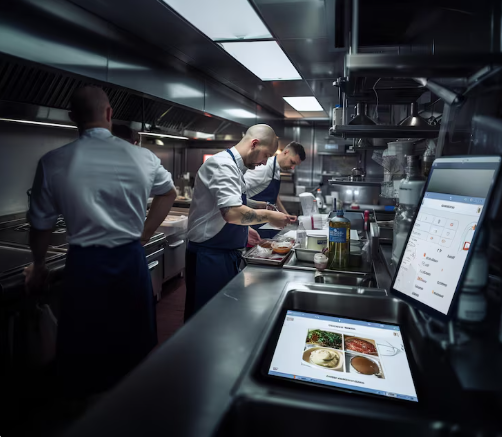
A kitchen display system plays a central role in order execution and kitchen efficiency. Testing ensures that orders appear in the correct sequence, reflect accurate modifiers, and update in real time as statuses change. Any delay or display error can disrupt kitchen workflows and increase ticket times.
Performance testing verifies that the display system remains responsive even when handling large volumes of simultaneous orders. Usability testing is also critical, as clear visual cues and reliable updates reduce kitchen errors and staff frustration.
Workflow software should be tested for clarity and responsiveness under stress. Visual delays, missed updates, or incorrect prioritization can slow preparation and create confusion during busy periods. Consistent testing ensures that interface behavior supports speed and accuracy rather than becoming a bottleneck.
Testing Multi-Channel and Drive-Thru Software Flows
Modern restaurants often operate across multiple order channels, which increases testing complexity. A drive thru system must be tested for speed, accuracy, and seamless integration with payment and kitchen platforms. Even small delays or synchronization issues can significantly impact throughput.
End-to-end testing ensures that orders flow correctly from the customer interface through fulfillment and completion. Stress testing helps identify system limits before they are reached during peak demand periods.
Multi-channel environments introduce timing and synchronization risks that require focused testing. Orders arriving simultaneously from different sources must be processed without duplication, delay, or misrouting. Thorough integration testing helps confirm that the system maintains accuracy and order integrity even during peak volume periods.
Automation and Continuous Testing for Restaurant Software
Given the frequency of updates in restaurant software, manual testing alone is not sufficient. Automated testing enables faster validation of core workflows after each change. Continuous testing pipelines help catch defects early, reducing the risk of production failures.
Automated test suites can cover transaction flows, order routing, system integrations, and error handling. This approach improves software quality while allowing development teams to move quickly without sacrificing stability.
Ensuring Software Quality Through Data and Monitoring
Testing does not stop at deployment. Monitoring tools and post-release validation help identify performance degradation, unusual error patterns, and real-world usage issues. These insights feed back into testing strategies, enabling continuous improvement.
High-quality restaurant software depends on a feedback loop between testing, monitoring, and refinement. This cycle ensures systems remain reliable as usage patterns and customer expectations evolve.
Conclusion
Software testing is a foundational requirement for any restaurant technology platform that aims to deliver consistent performance and operational reliability. By prioritizing testing across order management, kitchen workflows, and multi-channel systems, restaurants reduce risk and improve service outcomes.
Strong testing practices ensure that technology supports growth rather than becoming a source of operational failure, making software quality a strategic advantage rather than an afterthought.