Software Testing Articles, Blog Posts, Books, Podcasts and Quotes
Financial technology has transformed banking, payments, insurance, and investment services at an unprecedented pace. Today’s FinTech ecosystem is built on customer-centric applications, real-time decision-making systems, and data-driven analytics platforms.
While checking features and functional correctness were once the core focus of quality assurance, QA teams are increasingly responsible for validating that applications also behave securely in real-world conditions. However, as systems become more distributed, cloud-native, and interconnected, traditional security testing approaches struggle to reflect how threats actually unfold in production environments.
AI in safety management is increasingly underpinned by complex software systems that must operate reliably in environments where failure carries real consequences. Whether supporting workplace safety, managing potential risks, or enabling automated systems, these platforms depend on robust software development and disciplined software testing.
You can look at the resume of any aspiring Quality Assurance engineer. You will likely see a list of acronyms. From ISTQB to various automation bootcamps, these certifications are the industry standard. They prove you know the basics. They provide the essential vocabulary of testing and the structural framework for writing test cases.
If you’ve ever tested a subscription trial you’ve already seen how sophisticated eligibility logic can be, one user qualifies, another is routed to a different offer, and a third sees a tailored experience based on device, location, or account history.
Software testing keeps evolving. Tools shift. Frameworks update. Teams reorganize. But something else is happening right now, and it’s easy to miss. Students – the people still juggling exams, dorm Wi-Fi, and late-night coding labs – are starting to change the future of software quality assurance.
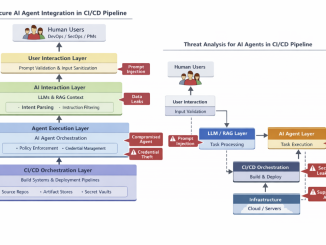
In the rapidly evolving landscape of DevSecOps, the integration of Artificial Intelligence has moved far beyond simple code completion. We are entering the era of Agentic AI Automation where speech or a simple prompt performs actions.