
From Logs to Tests: A Practical Guide to Production-Driven QA Coverage in Regulated Environments
In this article, Tanvi Mittal explains how to exploit production logs to detect issues that were not covered by pre-release test suites.

In this article, Tanvi Mittal explains how to exploit production logs to detect issues that were not covered by pre-release test suites.

Software testing has always been about ensuring reliability finding bugs before users do, validating performance, and maintaining software quality under pressure. But the way testing is done today is shifting rapidly.

Some engineering work is easy to describe precisely: Write a PDF parser or implement IMAP correctly. Write a compiler against a defined language spec. The work may still be hard, but the target is clear enough that a machine can keep trying, checking, and improving.
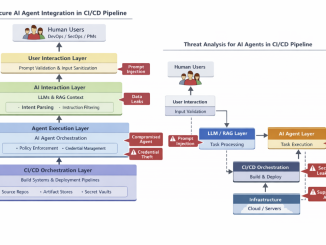
In the rapidly evolving landscape of DevSecOps, the integration of Artificial Intelligence has moved far beyond simple code completion. We are entering the era of Agentic AI Automation where speech or a simple prompt performs actions.

Quality at speed is the real benchmark of modern software teams. A reliable QA process protects that speed without trading away user trust or stability. Even strong teams develop blind spots over time. Regression cycles stretch, automation coverage stalls, and production fixes start creeping into every sprint.

In an era where artificial intelligence (AI) writes code, reviews pull requests, and even generates tests, how does the standard Testing Pyramid still hold up? Has it quietly crumbled under more modern demands?

It appears that one consequence of being a tech lead is that team members consider you the default reviewer for all their pull requests (PR). Though the code review process seems straightforward, there are many aspects that need to be considered.
Copyright © 2009-2026 Software Testing Magazine by Martinig & Associates