
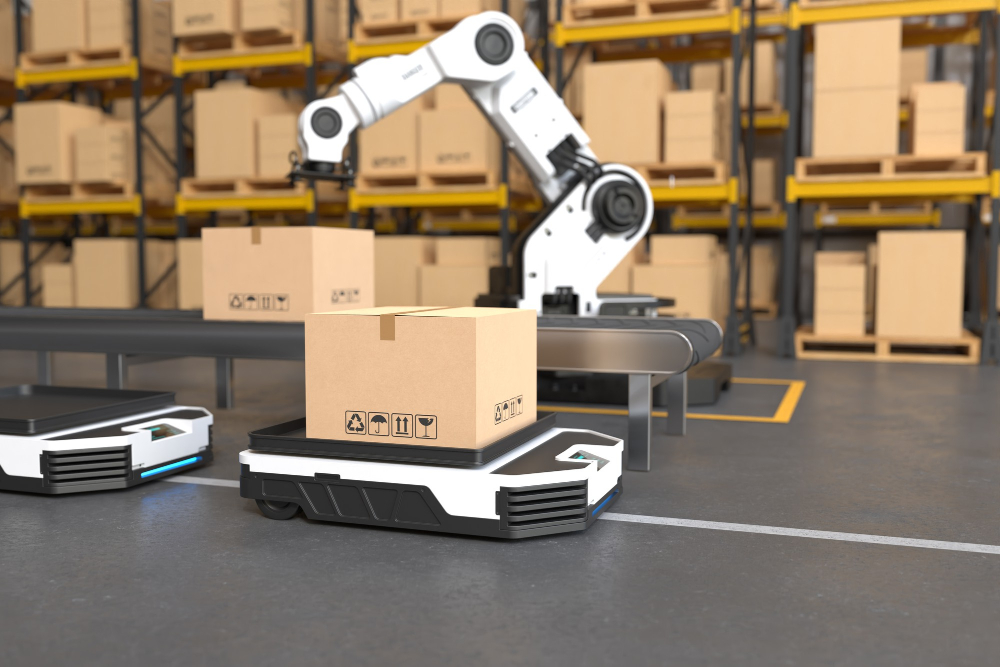
Warehouse robotics are now essential for inventory management, order fulfillment, and improving operations. People often talk about cutting-edge hardware, but the software is what really makes a robot work.
It’s vital to check that software works well in the real world. Every time a warehouse robot is produced, it needs to be tested a lot to make sure it performs the same way every time and doesn’t break down too often.
The Complexity of Warehouse Robotics Software
Software in autonomous robots in warehouses is more complex than many other software systems. These systems often integrate multiple modules, including:
- Sensor processing (for navigation and obstacle detection)
- Decision-making algorithms (for path planning)
- Real-time communication with Warehouse Management Systems (WMS)
- Safety interlocks and emergency handling
- Interfaces with conveyor systems, scanners, and human operators
These parts constantly interact with the physical world, which means they face unpredictable situations like temporary sensor errors, sudden obstacles, and changing communication delays.
To ensure that the system functions properly and safely, software tests must handle this complexity. Simple tests that only look at small parts of the code are not enough.
Source: Freepik
How Software Testing Improves Robotics Reliability
Here are the main reasons why software testing matters.
1. Early Defect Detection
One of the best things about testing software is that it finds bugs early in development, before they go into production. It’s cheaper and easier to rectify mistakes when you find them sooner.
If a warehouse robot makes a mistake early on in figuring out the order of tasks or coordinates, it could end up placing things in the wrong spot or crashing into things. Testing carefully throughout development helps find these flaws before they go into production, which saves time and money on repairs later.
2. Simulation and Real-World Scenarios
Warehouse testing frequently creates detailed simulation environments that replicate real-world conditions. These tests show how the software deals with unusual situations like:
- Poor lighting conditions for visual sensors
- Obstructions in aisles
- Unexpected obstacles
- Network latency and communication packet loss
By testing software in many different simulated situations, developers can see how reliable it will be after deployment. These simulations also help with automated regression tests to make sure new changes do not break what already works.
3. Integrated and System-Level Testing
Testing warehouse robotics needs more than just unit tests for small code sections. It also needs integration testing, which checks how parts work together, and system-level testing, which looks at the whole solution. Integration tests might check how navigation works with real-time sensors, while system tests see how a robot handles a full order, from receiving it to placing inventory.
Comprehensive testing makes sure that each part works well on its own and with other parts. This makes it much less likely that things will go wrong when robots and people work together in real warehouses.
4. Regression Testing for Ongoing Releases
Storage software is always changing. It adds new features, fixes issues, makes things run faster, and makes things safer. Regression testing is when you perform tests that have already been done to see if the modifications you made broke anything that was operating fine before. This is very crucial in robotics since a little modification in one element of the system can cause issues in another portion.
When regression testing is automated and built into the continuous delivery process, developers can be considerably more sure that the program will work well and be stable.
5. Real-Time Monitoring and Runtime Validation
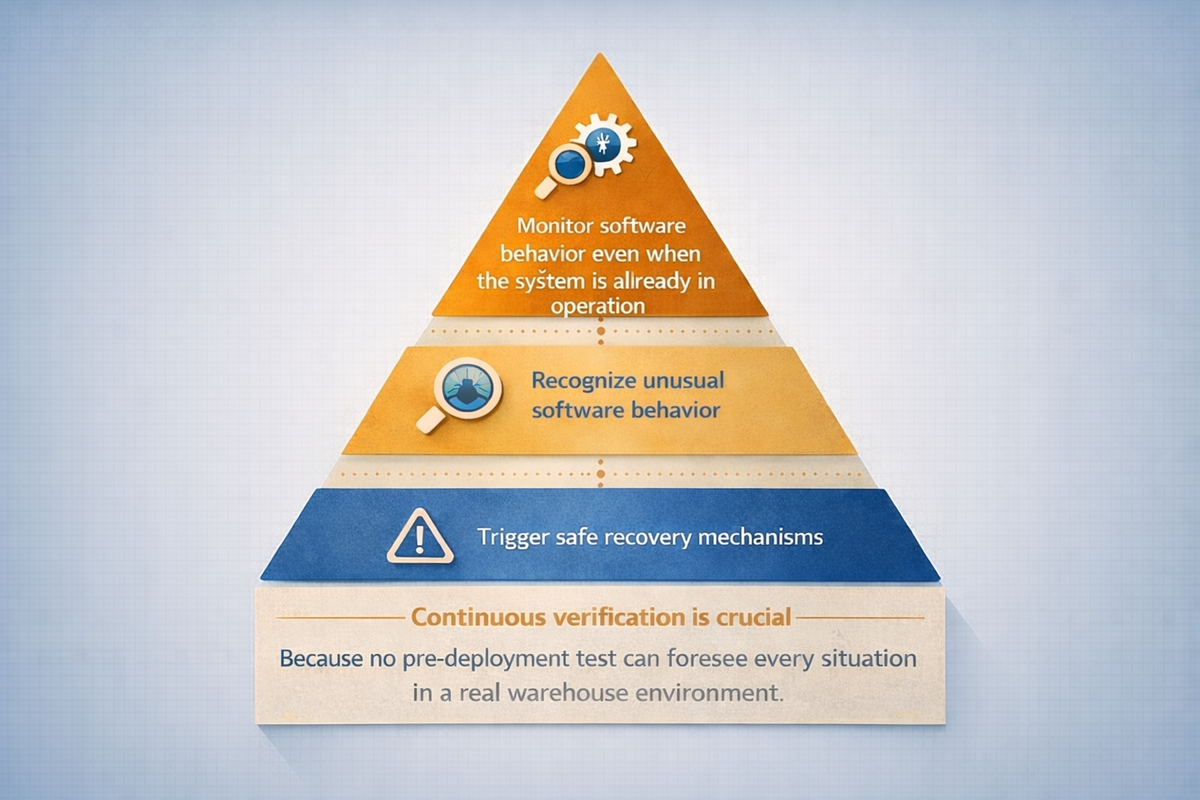
Monitoring the software’s behavior while the system is in use is as important as testing before operation. Such runtime verifications allow detection of unusual behavior or unexpected software responses in time. If something goes wrong, the system can react immediately and trigger safe recovery mechanisms.
This constant monitoring is crucial because no pre-commissioning test can anticipate every situation that may occur in a real warehouse environment.
Why Reliability Matters More Than Ever
Warehouse automation is now a key part of global supply chains. Industry reports show that robotics vendors are being held to higher standards for proving their systems work well in real warehouse conditions, like damaged packaging or odd materials.
Without strong testing and reliability checks, companies risk disruptions, delays, or safety issues that can cancel out the benefits of automation.
Failures in warehouse robotics software are not just theoretical; they can cause real problems and costs. If integration and edge cases are not tested, failures happen more often in complex systems.
Conclusion
Logistics today uses warehouse robots to speed up and streamline processes. Their complex program must be tested at every level—unit, integration, simulation, regression, and system—to ensure real-world performance.
Without proper testing, warehouse robot systems are more likely to break down in the field, which is costly, inefficient, and dangerous. However, extensive software testing ensures robotics performs well, is safe, and is consistent.
Leave a Reply