Tutorials and resources on how to apply test automation in software testing
HP Quick Test Professional is a test automation tool, also known as QTP. It is used to automate functional, regression and smoke test cases. It is a very popular software testing tool and works on MS windows O/S, supports development technologies like Active X, Delphi, Java, .Net, Oracle, People Soft, Web services etc. This article presents some best practices while doing automation using QTP.
This presentation shows how to easily go from user stories to automated integration tests that themselves read like user stories. You can accomplish this by using custom domain-specific languages (DSL).
A detailed guide to creating a mature and paralellizable automated software testing suite. This talk will cover things such as data independence, atomic tests, state generation, testing oriented pages. It includes sample code, demos and funny cat memes.
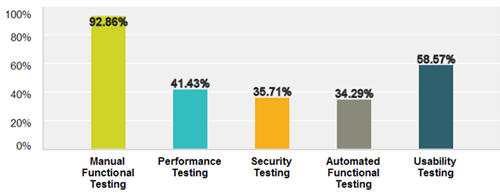
Are you doing enough mobile testing? Most don’t, find out how you compare to other development and testing teams. XBOSoft surveyed global software development and software testing teams to understand mobile testing best practices. Use the results from their report to benchmark your own efforts. Below is an article based on the part of the report that covers what types of testing organizations do.
What main factors contribute to success in test automation? What common factors most often lead to the failure of an automation effort? There are no simple universal answers to these questions, but some common elements exist. We believe that two of the most important elements are management issues and the testware architecture:
Easy Coverage is an open source framework that can dynamically generate Java unit tests to perform basic verifications. Easy Coverage is extensible and highly configurable. It can work as a standalone product or it can be used with JUnit. In his blog post, Romain Delamare explains how to dynamically generate Java unit tests with Easy Coverage.
Many people make mistakes in test automation based on good intentions but flawed knowledge. This video presents four intelligent software testing automation mistakes: Automation should find bugs, Test tools are tools for testers, Automate manual tests and Automation has to achieve ROI.