

Every spin of a slot reel, every card dealt, every roulette outcome depends on one critical assumption: that the result is genuinely random. For casino operators, regulators, and the players who trust them, that assumption must be provable — not just claimed.
Behind the scenes, a rigorous process of algorithm verification, statistical testing, and independent auditing works to ensure that randomness is real and that no systematic bias exists in any game. Understanding how that process works reveals why certified randomness is the foundation of fair play in modern digital gambling.
Why Randomness Matters in Casino Games
Casino games are built on probability. For those probabilities to hold, outcomes must be unpredictable and statistically independent of one another. If a random number generator produces patterns — even subtle ones invisible to ordinary players — the mathematical basis of the game collapses. Regulatory bodies require operators to prove randomness before any real-money game is offered to the public.
As Rick Slot, casino content specialist at Slotozilla, notes: “Players rarely consider the mathematics behind the games they enjoy, but every spin or card draw depends on algorithms that have been tested exhaustively before a single real bet is placed.” The integrity of player experience — from casual sessions to high-stakes gameplay — rests entirely on this invisible infrastructure.
How RNG Algorithms Work
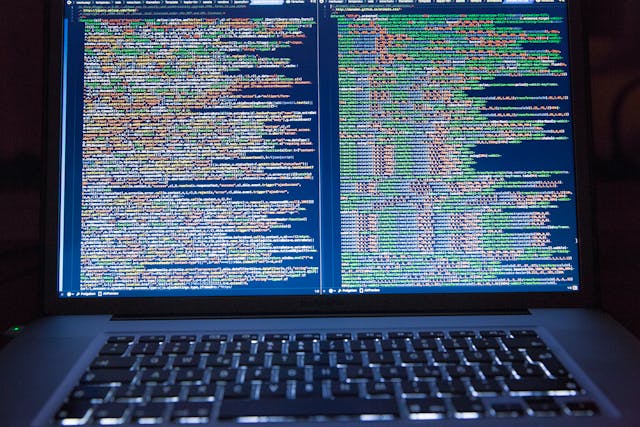
Most casino games use pseudo-random number generators (PRNGs) — deterministic algorithms that produce sequences of numbers indistinguishable from true randomness under statistical scrutiny. A PRNG begins with a seed value: a starting input derived from a high-entropy source such as system clock data, hardware noise, or user interaction. From that seed, the algorithm generates an effectively unpredictable sequence of outputs.
Modern casino systems frequently combine PRNGs with true random number generators (TRNGs) that draw from physical phenomena — thermal noise, radioactive decay — to introduce genuine unpredictability into the seeding process. The result is a system that is statistically random, reproducible for audit purposes, and resistant to prediction.
Core Testing Methods for Randomness
Statistical testing is the primary tool for detecting bias in RNG output. Testers run generated sequences through a battery of tests designed to identify any deviation from expected randomness:
- Frequency test — checks whether 0s and 1s appear with equal probability across the output sequence
- Runs test — identifies consecutive identical outputs that would indicate clustering or patterning
- Chi-square test — measures whether the distribution of outcomes fits the expected statistical model
- Spectral test — detects correlations between successive values that might reveal structural regularities
- Long-run uniformity check — confirms that over millions of iterations, all outcomes remain within acceptable deviation bounds
The NIST SP 800-22 test suite, published by the National Institute of Standards and Technology, provides a standardised framework for this kind of evaluation and is widely referenced by casino testing laboratories.
Independent Audits and Certification Bodies
No casino self-certifies its own randomness. Third-party testing laboratories — including eCOGRA, iTech Labs, BMM Testlabs, and Gaming Laboratories International (GLI) — conduct independent evaluations of casino software before it goes live and at regular intervals thereafter.
These organisations review source code, run statistical test suites, verify seeding processes, and publish compliance certificates that regulators and players can reference. Licensed platforms such as Verdecasino operate under jurisdictions that mandate third-party RNG certification before any real-money game is offered — the published certificate is evidence of that process having been completed.
Continuous Monitoring in Live Environments
Certification at launch is necessary but not sufficient. Casino systems are monitored continuously during live operation to detect anomalies that might emerge over time. Statistical drift — where observed outcome distributions gradually deviate from expected values — can signal a software fault, hardware degradation, or deliberate manipulation.
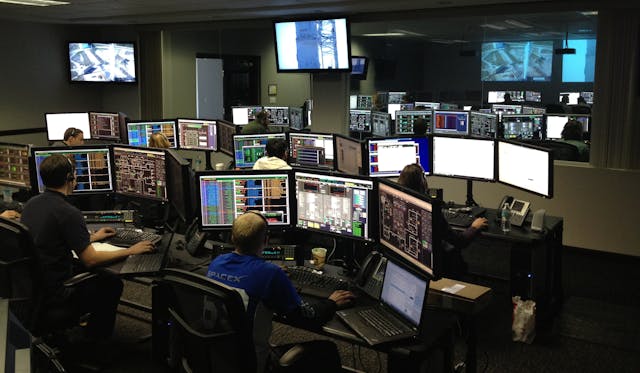
Modern monitoring platforms aggregate outcome data in real time, applying automated threshold alerts when any metric moves outside acceptable parameters. When anomalies are detected, the affected game is typically suspended pending investigation and, if necessary, re-certification.
Algorithm Transparency vs. Security
There is an inherent tension in RNG verification: transparency builds trust, but too much disclosure creates attack surfaces. Publishing exact seed generation methods or PRNG parameters would allow adversaries to reverse-engineer outputs.
The standard solution is selective disclosure — operators share full technical specifications with licensed testing bodies under non-disclosure agreements, while publishing only high-level compliance summaries to the public. This model has proven robust, balancing the need for verifiable fairness with the operational security that protects both operators and players.
Fairness as an Ongoing Process
Randomness verification is not a one-time checkbox. It is a continuous cycle of testing, monitoring, re-certification, and regulatory oversight that runs in parallel with every game ever played. The statistical rigour behind it is invisible to most players — but it is precisely what makes their trust in the system rational. As casino technology evolves, so do the testing frameworks designed to keep it honest.
| Testing Method | What It Evaluates | Purpose |
| Frequency Test | Distribution of 0s and 1s | Detect basic output bias |
| Runs Test | Consecutive identical outputs | Identify clustering patterns |
| Chi-Square Test | Outcome distribution fit | Confirm statistical model alignment |
| Spectral Test | Inter-value correlations | Reveal structural regularities |
| Long-Run Uniformity | Deviation over millions of trials | Validate sustained fairness |
An interesting topic in a moment where the non-deterministic results of AI-based systems are posing new challenges to software testing and software QA.