Software Testing Practices Evolve to Support Complex Applications
If testing used to feel like checking a single house, modern testing can feel like inspecting a whole neighborhood while the builders are still pouring concrete.


Software Testing Articles: Load Testing, Unit Testing, Functional Testing, Performance Testing, Agile Testing, DevOps
If testing used to feel like checking a single house, modern testing can feel like inspecting a whole neighborhood while the builders are still pouring concrete.

The world of digital gaming has seen a dramatic transformation, shifting from basic browser games to sprawling, high-traffic ecosystems that are as intricate as global financial systems. As we head into 2026, the bar for entering this space has never been higher. Gamers are no longer just looking for fun; they want instant satisfaction, complete transparency, and top-notch security.

QA teams are often overwhelmed. It’s not because the workload has suddenly increased; it’s because the way tests are managed doesn’t keep up with how the product changes. Over time, the test suite grows, similar tests are rewritten because it seems faster than reworking what’s already there, and a small feature change leads to editing multiple tests across different sections.
Vibe coding is the shorthand people use for a newer style of building software where speed, intuition, and AI assistance dominate the workflow. Instead of carefully planning every module and writing each line manually, developers increasingly describe intent, let AI generate code, then iterate rapidly based on what feels right in demos.

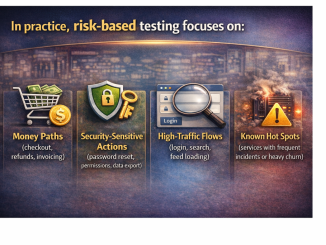
Fast-growing products have a special kind of chaos. New features ship weekly, teams multiply, and yesterday’s “temporary” workaround quietly becomes a core dependency. In such an environment, a test strategy cannot be a written document or a one-time effort to increase automation.

No-deposit bonuses are among the most complex promotional features implemented in modern web applications. From a quality assurance perspective, no-deposit bonus workflows must be evaluated not only for functional accuracy but also for security and data integrity.

High-traffic entertainment platforms have a very specific problem: they don’t get to “mostly work.” When thousands or millions of people are logging in, tapping around, and making payments at the same time, even a small hiccup can turn into a real business incident.
Copyright © 2009-2026 Software Testing Magazine by Martinig & Associates