
Speed drives modern product development. Startups and big companies both feel the pressure to launch fast, test their ideas in the real world, and grab attention before someone else does.
That’s why the Minimum Viable Product, or MVP, sits front and center in most innovation strategies.
But here’s the catch – when you move fast, quality can take a hit. If you rush, you end up with buggy builds, clunky user experiences, security holes, and unhappy users.
For any company that wants to stick around, speed isn’t enough. You need solid testing and quality assurance baked in from the very beginning.
Get the Right Partners Involved Early
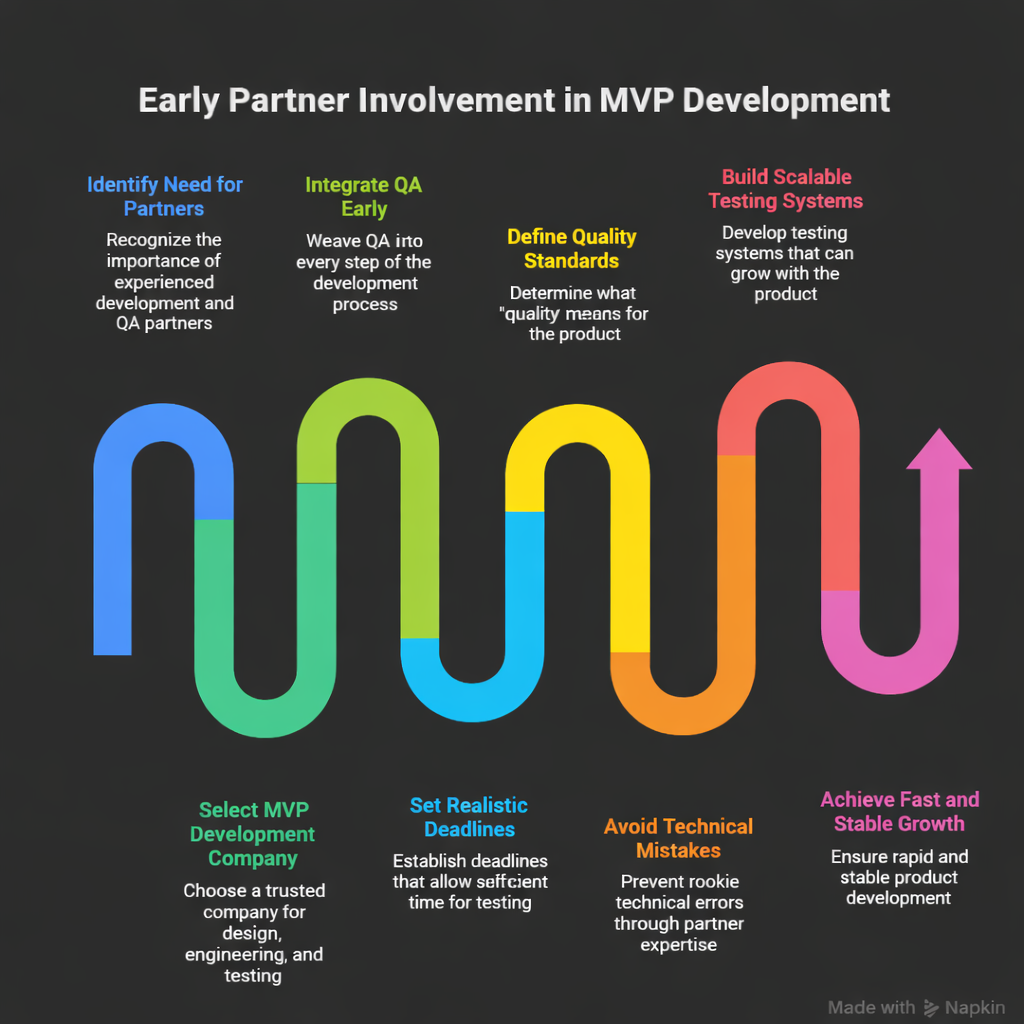
One of the smartest moves is to bring in experienced development and QA partners from day one. Tons of startups tap trusted MVP development companies for their design, engineering, and testing abilities.
These partners usually don’t treat QA as something you tack on at the end. Instead, they weave it through every step of the process.
With the right MVP partner, teams can:
- Set deadlines that actually leave time for testing
- Define what “quality” means for the product
- Dodge rookie technical mistakes
- Build testing systems that will grow with the product
When you plan for testing from the start, you can move fast and stay stable. That foundation pays off as your product grows beyond its initial version.
Make Testing Part of the Workflow
Waiting to test “after development is finished” doesn’t work, especially when you’re moving at startup speed. Features keep popping up, timelines shift, and bugs multiply.
That’s where continuous testing shines. Modern MVP teams run QA in parallel with development. Every feature gets tested as it’s built, not just at the end of the sprint.
Key pieces of this approach:
- Unit tests alongside code
- Automated regression tests
- Non-top integration testing
- Quick build checks every day
This isn’t just about quality – it keeps your team moving quickly, since they don’t get slammed with delays at launch.
Test What Matters Most
You can’t test everything to the same degree, not if you want to ship on time. Trying to do that drains your resources and slows you down.
Think about it: the core user flows, payment systems, anything handling data, security, authentication – those are the hotspots. They need serious testing.
Processes like small UI tweaks? Those can wait. Lighter testing is fine early on. This way, you can protect important aspects and keep shipping.
Risk-based testing ensures that your quality activities remain aligned with business goals.
Lean on Automation
Automation is the game-changer that helps you align speed and quality. Automation enables you to get feedback quickly and deploy frequently.
Where automation excels in MVPs:
- Smoke tests
- Regression tests
- API tests
- Performance baselines
Of course, there is some initial investment in automation. But once you have it up and running, it will repay you handsomely. Your automated test suite catches bugs before they reach users – every time you deploy.
However, don’t completely forget manual testing. You still need human testers for exploratory testing, usability testing, and sniffing out weird edge cases that automation doesn’t detect. Check this video out to learn more about the differences between these two types of tests.
Building QA-Friendly MVP Architectures
If you rush an MVP together without thinking about QA, you’re pretty much setting yourself up for headaches later. Debugging gets messy, and maintenance turns into a slog.
But start with clean architecture and make your life so much easier. Think modular pieces, clean APIs, consistent data formats, and test environments that stay out of production’s way.
With this setup, testers can poke at one piece without breaking everything else. Automation feels less painful, and you can track down bugs much faster.
Maintaining Quality During Rapid User Feedback Cycles
One of the best aspects of MVPs is how quickly you can get user feedback. Early adopters love to share what works and what’s broken, and their input basically shapes the product.
But moving fast has a dark side – you roll out new updates all the time, and if you skip testing, things break.
Every new version needs a proper QA check. It doesn’t matter if the change looks tiny – test it. Solid feedback-driven testing means you always check new features against what users want, retest anything that touches existing workflows, watch for performance dips, and make sure your data stays clean.
Sure, skipping tests might save you a day or two, but you’ll pay for it later. Stick to a solid QA process, even when things move fast. It keeps your product’s reputation intact while you grow.
Creating a Culture of Quality in MVP Teams
Tools and checklists only get you so far. Real quality comes from the team’s attitude. Everyone has to care about software quality – devs, testers, designers, product managers, all of them.
Set clear standards, and make sure everyone gets it: defects aren’t just bugs; they’re top priority problems. Work together to solve issues instead of playing blame games. Never cut corners that could hurt stability.
When the whole team owns quality, you don’t have to force it. Speed and reliability start to balance out on their own.
Leave a Reply