Behavior-Driven Development (BDD) agile testing articles, tools, tutorials and videos.
Behaviour Driven Development (BDD) is an Agile practice that aim at merging requirements documentation and software testing. What makes this technique different is that it engages Stakeholders from start to finish of a project. This is done by writing Specifications by Example in collaboration with all Stakeholders.
Behavior Driven Development (BDD) is an software development technique that use a specific format that allows both to describe the system requirements, the features, and to feed an functional software testing tool that will allow to verify the software product. In this blog post, Shashikant Jagtap explains how to write better feature files.
This presentation incrementally demonstrates the concepts of Unit Testing, Test-Driven Development (TDD) and then Behavior-Driven Development (BDD) that enable us not just to create robust regression tests, but also clean and maintainable code.
Behavior-driven development (BDD) is an increasingly popular variation on test-driven development, which helps developers think more in terms of “executable specifications” than in terms of conventional tests. There are dozens of BDD tools for the JVM out there—how do you know what to use and when?
Behavior-Driven Development (BDD9 and Acceptance Testing are heavily intertwined and in many aspects are one and the same. Both focus on starting at the outer layers of your application by concentrating on what matter to users; behavior.
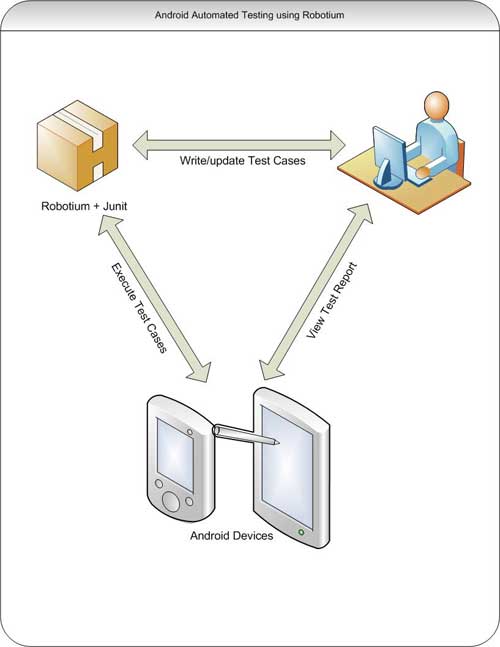
The purpose of the article is to implement a Behavior Driver Development (BDD) infrastructure for Android applications with the JBehave open source BDD tool and Robotium open source Android testing software. We will go through complete architectural understandings and try to set-up the framework.
In this blog post, Dror Helper presents a short “getting started” procedure to do Behavior Drive Development (BDD) with SubSpec. SubSpec allows developers to write declarative tests operating in C# at all layers of abstraction consisting of highly composable, small primitive concepts. SubSpec is based on the xUnit testing framework and can easily be integrated into existing testing environments. The blog post shows how to write its first behavior test and how to run all the assertions in one test.