Tutorials and resources on how to apply unit testing in software testing
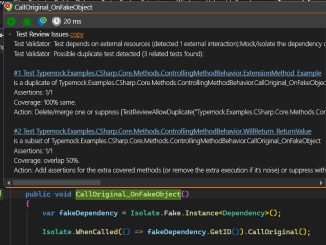
Like code, you can ask AI to generate your unit tests. But what about the quality of the resulting scripts. Who is going to check the coverage of the resulting to these automated tests? This article discusses the issue of ensuring that every AI-generated unit test contributes unique value is becoming the real challenge.
As AI makes test creation nearly effortless, software teams face a new challenge: determining which tests actually improve quality and which simply add noise.
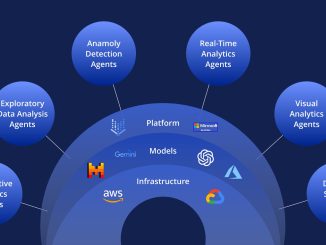
As distributed systems are too complex for deterministic testing, AI can help. In this article, Naveen Prakash proposes an approach based on the ideas of chaos engineering and AI-assisted testing. The focus shifts from testing individual pieces to understanding what happens when many services run together under unpredictable conditions.
This talk aims to introduce property-based testing, why you may want to use it, and real-life use cases for including it in code bases. Property-based testing is an approach to testing that involves specifying statements that should always be true (for example, reversing a list twice will give the original result) rather than relying on specific examples.
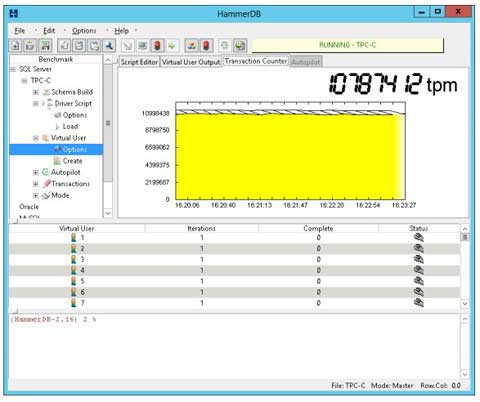
Database testing is one of the areas that might have the smaller number of open source tools. The programming languages have many xUnit tools and mocking frameworks, but this is not the case for databases. This article provides a list of open source tools that can be used to perform unit, load and security testing on several relational (MySQL, Oracle, SQLServer, etc.) and NoSQL databases.
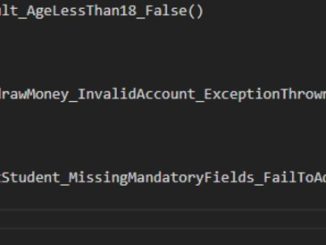
As unit testing is often the first quality activity targeting code during the software development lifecycle, this article considers several examples of effective approaches to the naming of unit tests.
This presentation shows how you can take advantage of the most recent additional to the unit testing tools in Visual Studio to build more reliable apps. Besides Visual Studio own tools, you can also run unit tests in Visual Studio by using third-party test frameworks such as NUnit, Boost, or Google C++ Testing Framework, depending on your programming language.