Software Testing Articles: Load Testing, Unit Testing, Functional Testing, Performance Testing, Agile Testing, DevOps
When developing software, you will need to write test cases to help ensure that your code is working as expected. Writing good database testing scenarios can go a long way toward improving your application’s reliability and making it easier to maintain in the future.
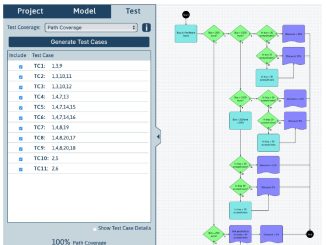
‘early Model Based Testing’ (eMBT) is a software testing approach that aims to optimize the test case design phase. The first part of this article presented the exploring and review phase of this approach. This article presents the generation of test cases from the model and their execution.
‘early Model Based Testing’ (eMBT) is a software testing approach that aims to optimize the test case design phase. This is achieved by stimulating communication and collaboration between all project stakeholders to get early feedback and a shared understanding of the requirements in an early stage of the software development life cycle.
As the use of mobile devices continues to grow, so does the importance of software testing a mobile app. Mobile apps are now an essential part of our lives and play a major role in how we communicate, work, and entertain ourselves, with millions of these being downloaded on a daily basis all over the world across a plethora of different devices.
Software testing productivity is usually computed as the amount of testing over the effort spent for testing, but it may not be accurately measured using these size metrics. To address this issue, this article presents a new approach to estimate the software testing effort with an independent metric. The sizing method is called Test Case Point Analysis (TCPA).
Software quality assurance is more dependent on test data than we all would like. You can’t escape it anymore: you need to do something with test data management. Why? Because without proper test data management you lose valuable time that is already scarce.
Many manual testers have a wrong idea about the basics of test automation, as a result, they draw false conclusions. In the following article, we will take a look at the top 5 questions about what test automation is and why switching to it is a must-have!